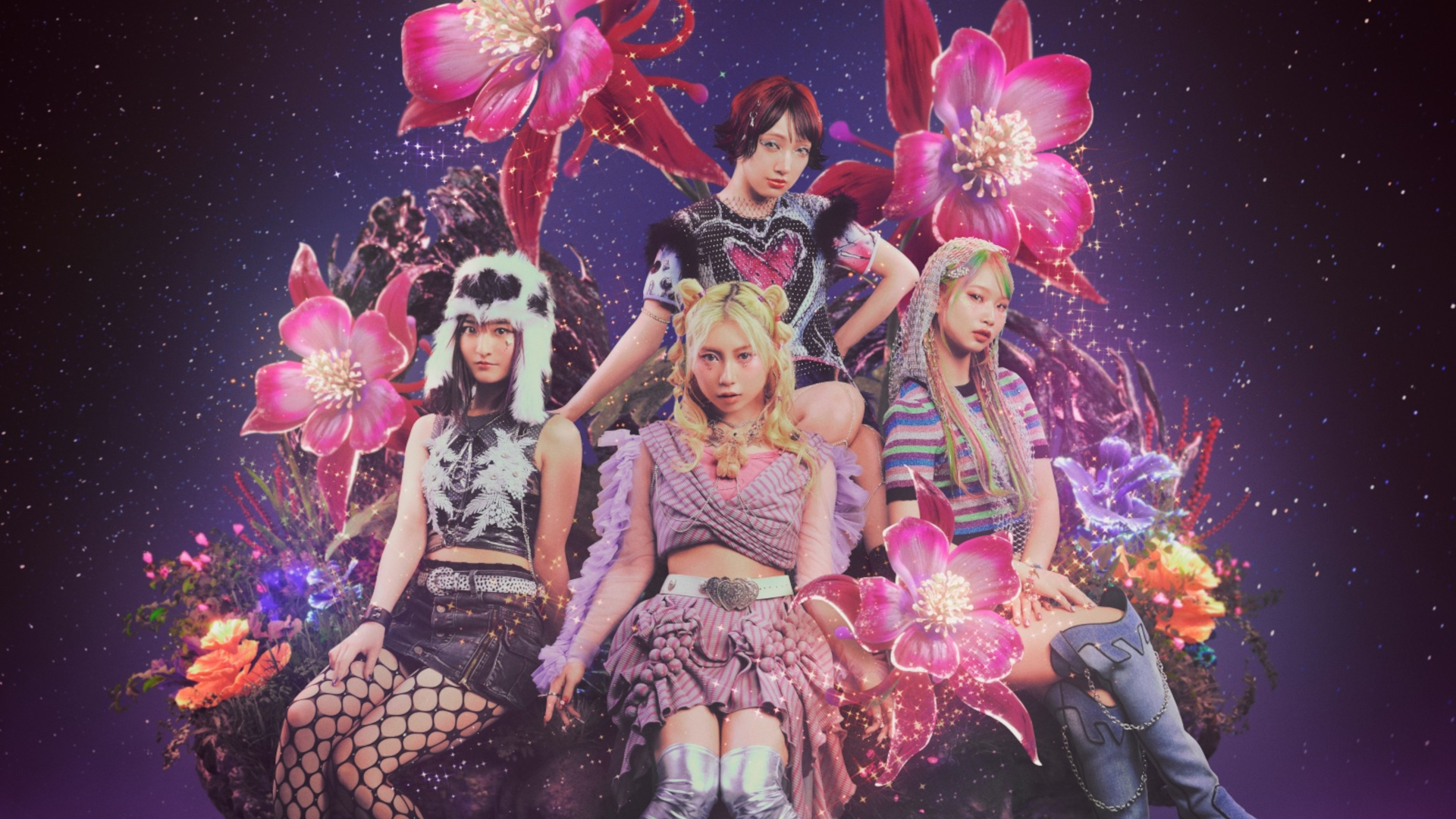
Unveiling a mystique long shrouded in secrecy, Japanese singer Ado takes small steps into the spotlight from behind her silhouette. She reveals parts of her true self for the first time in the mesmerizing Vivarium music video released on February 28.
Since the start of her meteoric rise to international fame, she has mostly been an unknown star hidden by an anime avatar. Even performing at live events inside a uniquely designed cage, such as her sold-out show at the Singapore Indoor Stadium on May 21, 2025. A cage that blocks the stage lighting from the front, leaving only her silhouette in view. For nearly a decade, many have wondered what the enigmatic singer looks like. Now we know—yet only so slightly, as Ado still leaves more of herself hidden in the music video.
From the start, beats swell with manic pacing at a rapid double-time tempo. Yet Ado’s powerful voice cuts through with striking confidence. As polyrhythmic elements, snare patterns, and shifting accents clash like sirens, a frantic, breathless quality emerges. What seems like chaos melds into a triumphant and powerful harmony.
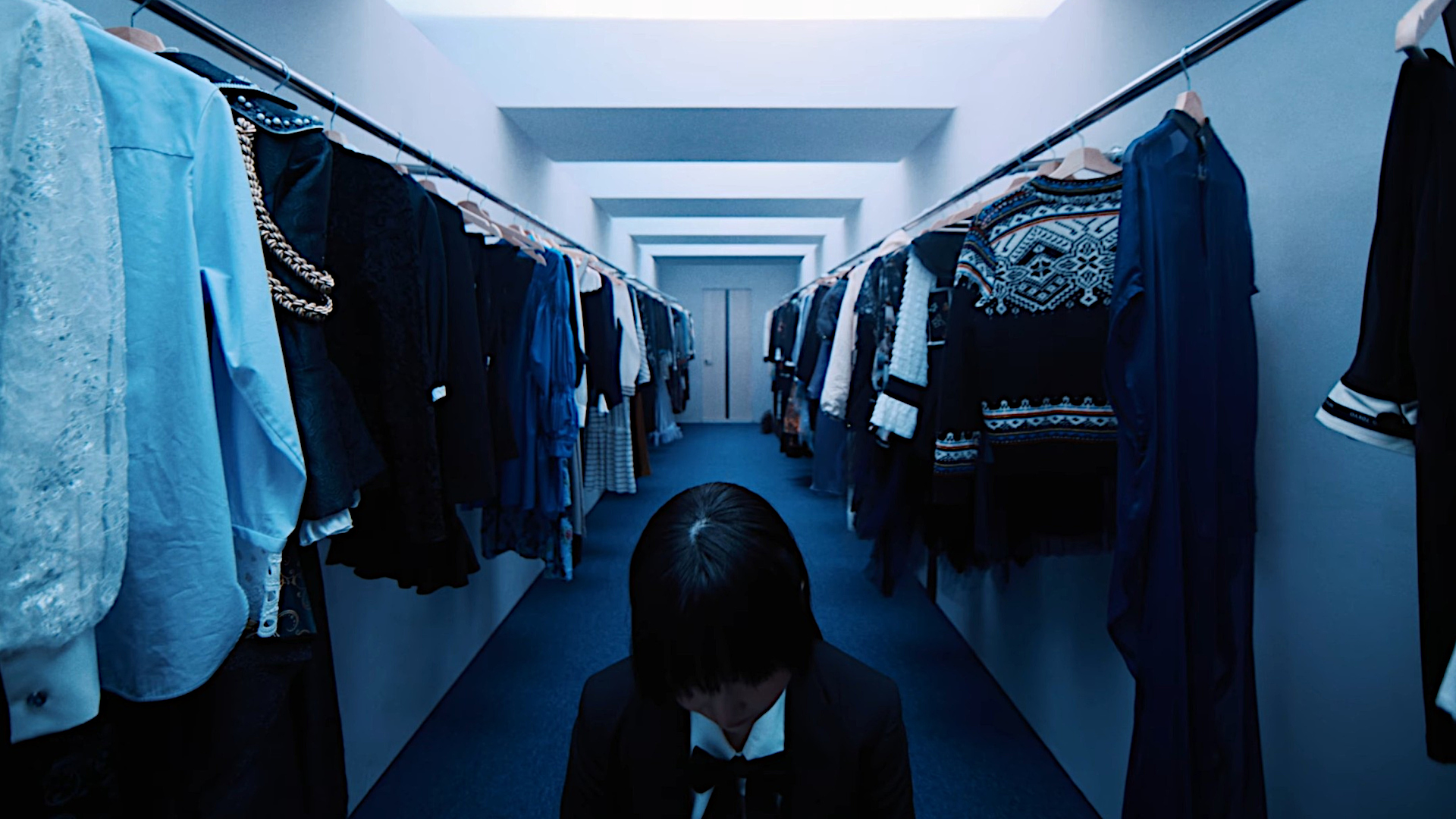
Her raw emotion is unhinged but clean and versatile, ranging from a tender mid-range to piercing high notes. It all culminates in a tour de force from the prolific artist, but it feels more personal than her past releases. Even more distinctive and intimate than her debut original single Usseewa [うっせぇわ]. Meanwhile, the visuals come across like an agoraphobic nightmare. There are live-action sequences of her in an unusually long, narrow closet.
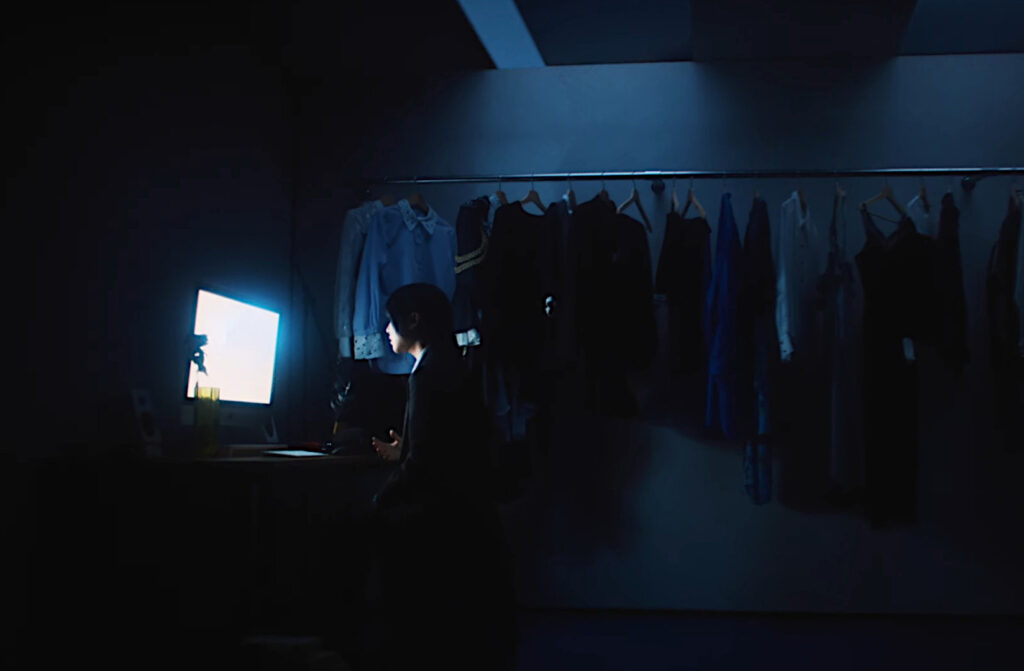
Additionally, the music video features scenes of Ado walking through a crowded street as pedestrians rush past her, creating a sense of isolation. It is as if these moments manifest struggles with loneliness and a desire for belonging. Finally, her escape comes at the end as Ado’s illustrated avatar runs down a daylight street, signaling for the real Ado to follow. Believe me, we will follow too! As we have covered before, Ado is one of several Asian artists you should be listening to right now.
Moreover, the new single is a musical extension of her autobiographical novel Vivarium: Ado and I, which in words explain, “why I wanted to become a singer, why I hate myself.” In a visceral way, the music video symbolizes her first live-action appearance, with sporadic shots of her face and hands allowing her real self to emerge. Notably, the novel and this music video both expose Ado’s vulnerable side. In a sense, she has opened a door to the world and is letting us know it’s both a confession and a triumph. Vivarium is a high-energy rocking track that rewards listeners for its layered details and emotional depth.
About Ado
A highly popular Japanese singer from Tokyo who rose to fame while maintaining an anonymous persona. Her identity was concealed behind anime avatars, silhouettes, or animations in music videos and performances. In 2017, as a teenager, she began her career performing cover songs on Niconico, a Japanese video-sharing service. These song covers with her real voice were inspired by the Vocaloid culture.
In 2020, her major breakthrough occurred with her debut original single Usseewa. The song’s raw, rebellious lyrics about cultural pressures and frustration resonated widely during the pandemic era. It topped music charts such as Oricon Digital. As a viral hit, it notched 100 million plays on Billboard Japan Hot 100 in a very short time for a young solo artist and amassed hundreds of millions of streams and views online.
Today, Ado continues to release new music and perform sold-out headline shows in Japan and overseas. She remains one of Japan’s top-streamed and most influential young artists, blending J-pop style, rock elements, and Vocaloid roots while evolving personally and artistically.